Engineering the immune system.
Remodeling the tumor ecosystem.
Improving cell therapies for solid tumors.
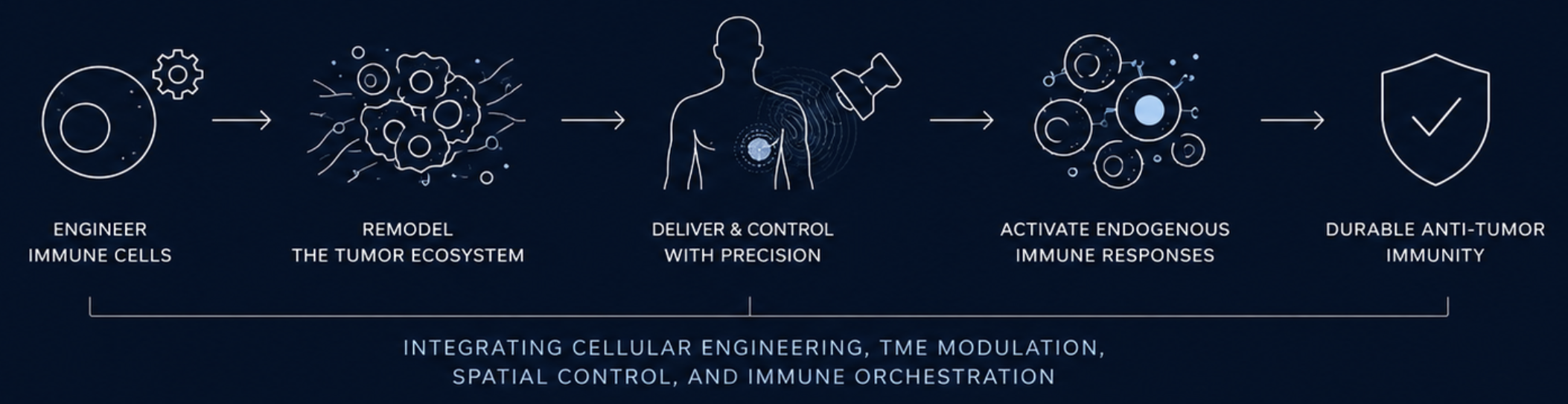
Our lab develops next-generation CAR-T therapies designed to overcome the physical, metabolic, and immunologic barriers that limit efficacy in solid tumors. By integrating cell engineering, tumor microenvironment remodeling, spatiotemporal programming, and systems immunology, we aim to create more effective and durable therapies.
RESEARCH OVERVIEW
Solid tumors remain highly resistant to cellular immunotherapy due to barriers including immune suppression, stromal exclusion, altered metabolism, antigen heterogeneity, and poor endogenous immune activation. We study these challenges as engineering opportunities, forming the four research pillars of our lab.

Our goal is to develop transformative therapies for patients with solid tumors.
RESEARCH PILLARS
Pillar #1: Engineering resilient CAR-T cells
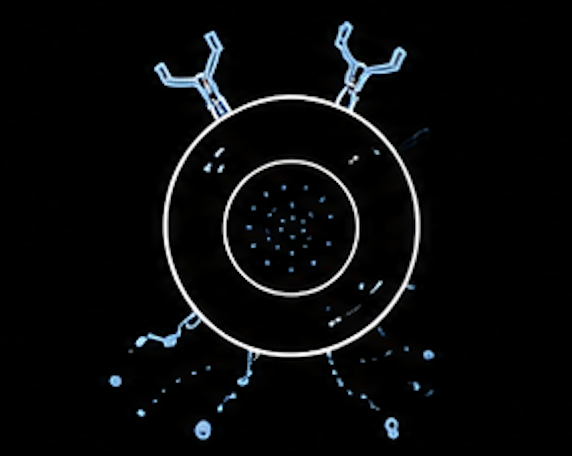
Our lab engineers CAR-T cells with improved persistence, metabolic fitness, trafficking, and resistance to suppressive tumor signaling pathways. We are particularly interested in how inflammatory signaling, mitochondrial function, and synthetic biology shape durable responses, and how distinct T cell subsets—including CD4+ CAR-T—can drive endogenous antitumor immunity within solid tumors.
Pillar #2: Remodeling the tumor microenvironment
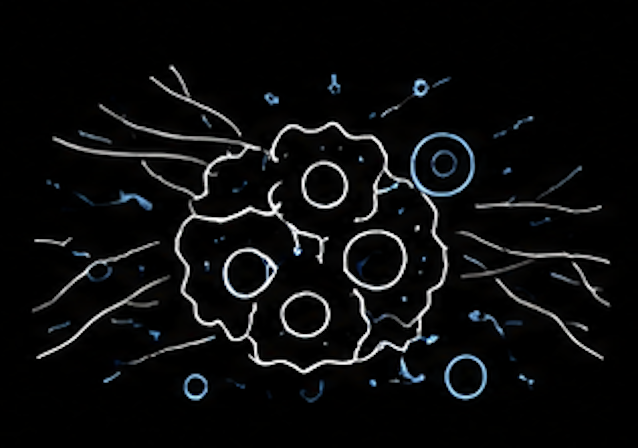
Dense extracellular matrix, fibrosis, and stromal remodeling create major physical and immunological barriers to CAR-T cell infiltration and function. We investigate how tumor stroma, cancer-associated fibroblasts, and extracellular matrix architecture regulate immune exclusion, and we develop strategies to remodel these barriers and improve therapeutic access to tumors.
Pillar #3: Spatially controlled immunotherapy
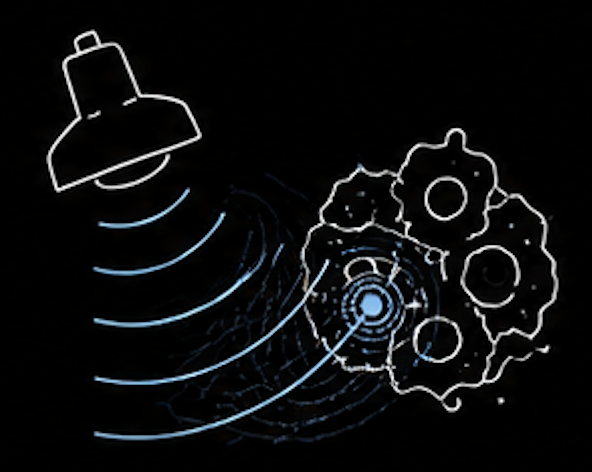
We are developing non-invasive strategies to spatially and temporally control cancer immunotherapy within tumors. By combining focused ultrasound with engineered cellular therapies and inducible systems, we aim to enhance tumor targeting while limiting systemic toxicity, overcoming tumor heterogeneity, and improving local immune activation.
Pillar #4: Activating endogenous immunity
Durable tumor control likely requires not only engineered cellular therapies, but also activation of the endogenous immune system. Our work explores how CAR-T cells interact with dendritic cells, macrophages, stromal populations, and other immune compartments to promote immune priming, antigen spreading, and long-term antitumor immunity.
TECHNOLOGIES & APPROACHES
CAR-T engineering
Metabolic profiling
CRISPR editing
MicroRNA therapies
Flow cytometry
Fluorescent microscopy
Mouse models
Patient-derived organoids
Sequencing
COLLABORATION / TRANSLATION
Our research integrates immunology, engineering, and oncology through collaborations spanning focused ultrasound, tumor microenvironment biology, microRNA therapies, metabolism, and pediatric and adult therapeutics. We aim to develop clinically translatable strategies capable of improving outcomes for patients with solid tumors, and we could not do this without our wonderful collaborators across UVA and beyond.